
Hair Thinning vs. Androgenetic Alopecia: Know the Difference

Reviewed by Dr. Ravali Yalamanchili
MBBS- Prathima Medical College
MD-JSS University, Mysore.
Hair Thinning vs. Androgenetic Alopecia: Know the Difference
Hair fall is something almost everyone experiences at some stage of life. A few strands on the pillow, extra hair in the shower drain, or noticing less volume while styling may not always feel alarming at first. But when hair starts becoming visibly thinner or the scalp begins showing more clearly, many people start worrying about whether it is temporary hair thinning or something more permanent like androgenetic alopecia.
The confusion between normal hair thinning and pattern hair loss is extremely common. Many people assume all hair loss conditions are the same, while others delay treatment because they think the problem will automatically improve over time.
Understanding the difference early is important because both conditions behave differently and may require different treatment approaches. Proper diagnosis also improves the chances of preserving hair density and supporting healthier regrowth.
Today, awareness about professional hair thinning treatment and advanced scalp care solutions is increasing as more people seek long-term answers instead of temporary cosmetic fixes.
What Is Hair Thinning?
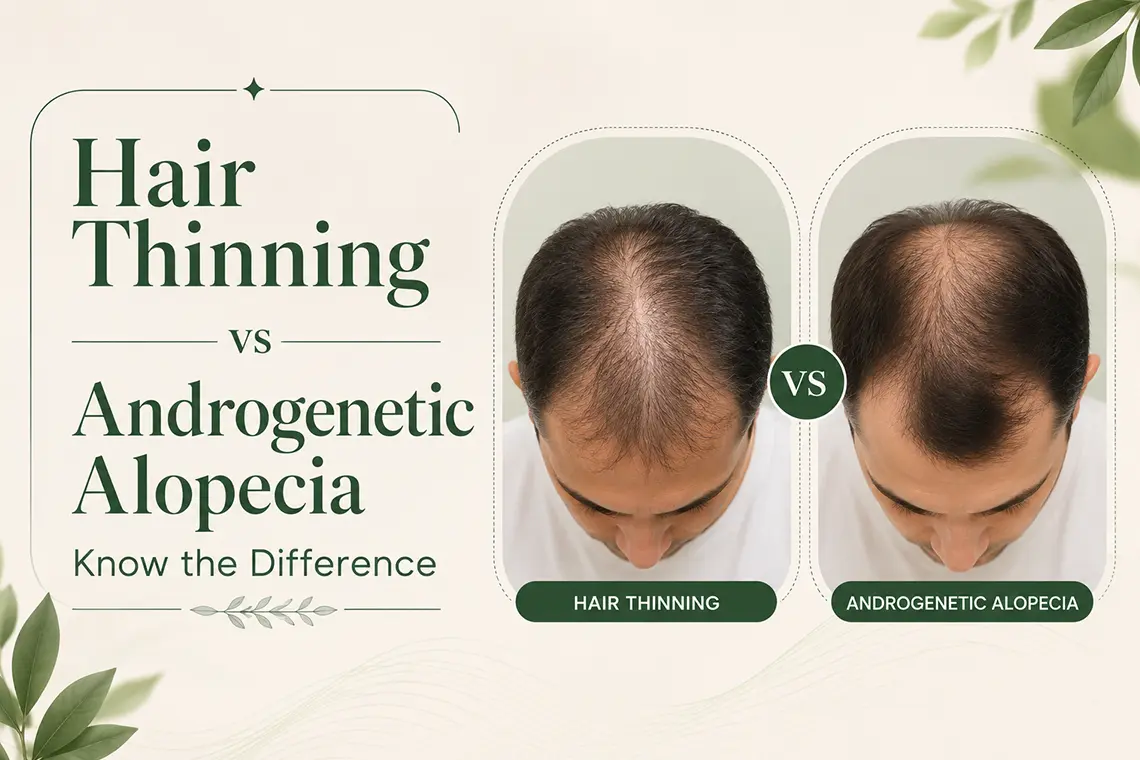
Hair thinning is a gradual reduction in overall hair density across the scalp. Unlike complete bald patches, thinning usually appears as:
- Reduced hair volume
- Finer hair texture
- Wider hair partitions
- Less fullness while tying or styling hair
- Increased hair shedding
Hair thinning can happen for several reasons, including:
- Stress
- Nutritional deficiencies
- Hormonal changes
- Illness
- Poor scalp health
- Crash dieting
- Lifestyle imbalance
- Heat and chemical damage
In many cases, hair thinning may be temporary if the underlying trigger is identified and treated properly.
What Is Androgenetic Alopecia?
Androgenetic alopecia is a genetically influenced form of progressive hair loss commonly known as:
- Male pattern baldness
- Female pattern hair loss
This condition develops gradually over time and usually follows recognizable patterns.
In men, androgenetic alopecia often begins with:
- Receding hairline
- Thinning at the crown
- Progressive bald areas
In women, it commonly appears as:
- Widening partition line
- Diffuse thinning across the scalp
- Reduced hair density without complete bald patches
Unlike temporary thinning, androgenetic alopecia is progressive, meaning it can worsen gradually if left untreated.
This is why early consultation for androgenetic alopecia treatment becomes important.
Hair Thinning Does Not Always Mean Baldness
One of the biggest misconceptions is assuming all hair thinning automatically leads to permanent baldness.
Temporary hair thinning may improve once underlying causes are addressed properly. For example:
- Nutritional correction
- Stress management
- Hormonal balance
- Scalp treatment
- Lifestyle improvement
can help restore healthier hair growth cycles in many individuals.
However, androgenetic alopecia behaves differently because it involves gradual shrinking of hair follicles over time.
Understanding this distinction helps avoid unnecessary panic while also encouraging timely treatment when needed.
Genetics Play a Major Role in Androgenetic Alopecia
Family history often strongly influences pattern hair loss.
People with relatives experiencing:
- Male pattern baldness
- Early thinning
- Progressive hair loss
may have higher chances of developing androgenetic alopecia themselves.
However, genetics alone does not determine how quickly hair loss progresses. Factors like:
- Stress
- Scalp health
- Nutrition
- Hormonal fluctuations
- Lifestyle habits
can also influence severity and progression.
Hair Texture Changes Can Be an Early Sign
Before visible baldness appears, many individuals notice changes in hair texture.
Common early signs include:
- Hair becoming finer
- Reduced hair strength
- Increased shedding
- Hair losing volume
- Slower regrowth
In androgenetic alopecia, hair follicles gradually miniaturize, causing strands to become thinner over time.
Early identification is important because treatment often works best before significant follicle weakening occurs.
Scalp Health Strongly Affects Hair Growth
Healthy hair growth depends heavily on scalp condition.
Poor scalp health can contribute to:
- Excessive oil buildup
- Inflammation
- Weak follicles
- Increased shedding
- Reduced hair growth quality
Professional scalp evaluation at a specialized scalp treatment clinic helps identify contributing factors affecting hair health.
In many cases, improving scalp condition supports better treatment outcomes for both thinning and patterned hair loss.
Men and Women Experience Hair Loss Differently
Hair loss patterns differ significantly between men and women.
Men often experience:
- Receding hairlines
- Bald spots
- Crown thinning
Women more commonly experience:
- Diffuse thinning
- Reduced overall density
- Wider scalp visibility
Because of these differences, treatment approaches may also vary.
This is why specialized female hair loss treatment and male pattern baldness treatment plans are often customized according to individual scalp conditions and hair loss patterns.
Stress and Lifestyle Can Accelerate Hair Problems
Modern lifestyles have increased several triggers associated with hair thinning.
Factors like:
- Irregular sleep
- High stress
- Poor nutrition
- Excessive styling
- Pollution exposure
- Hormonal imbalance
can worsen existing hair conditions or trigger temporary shedding episodes.
Even genetically influenced hair loss may progress faster when combined with poor lifestyle habits.
Professional Diagnosis Matters
Self-diagnosing hair loss conditions through internet searches or social media advice often creates confusion.
Different conditions may appear similar visually but require completely different management approaches.
A professional dermatologist for hair loss typically evaluates:
- Hair density
- Scalp condition
- Family history
- Shedding patterns
- Hormonal factors
- Follicle health
before recommending treatment options.
Proper diagnosis helps avoid ineffective treatments and unnecessary delays.