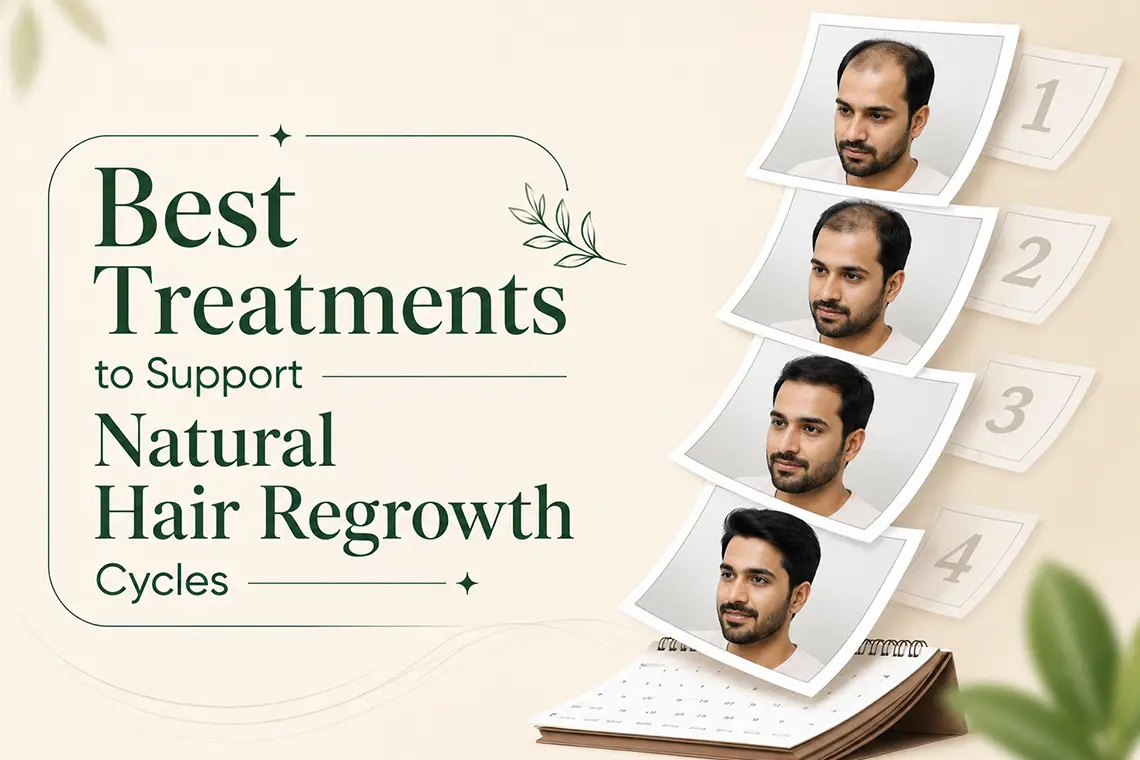
Best Treatments to Support Natural Hair Regrowth Cycles

Reviewed by Dr. Ravali Yalamanchili
MBBS- Prathima Medical College
MD-JSS University, Mysore.
Best Treatments to Support Natural Hair Regrowth Cycles
Healthy hair growth is a gradual biological process that depends on multiple internal and external factors working together properly. While many people focus only on visible hair fall, the real concern often begins much earlier, when the natural hair regrowth cycle becomes weaker or disrupted.
Hair growth is not a constant process. Every strand of hair goes through a repeating cycle of growth, rest, shedding, and regrowth. When this cycle becomes imbalanced because of stress, hormonal changes, scalp issues, genetics, poor nutrition, or lifestyle factors, hair may start becoming thinner, weaker, and slower to regrow.
Today, many individuals are looking for treatments that support the scalp’s natural healing and regeneration process instead of depending only on temporary cosmetic solutions. This growing shift has increased awareness around modern hair regrowth treatment options focused on improving long-term scalp and follicle health.
Understanding the Natural Hair Growth Cycle
Hair naturally grows in different stages:
- Growth phase
- Transition phase
- Resting phase
- Shedding phase
Under healthy conditions, new hair continuously replaces older strands. However, when follicles become stressed or weakened, this cycle can slow down or become disrupted.
Common signs of disrupted regrowth cycles include:
- Excessive hair shedding
- Reduced hair density
- Slow regrowth
- Thinner strands
- Wider scalp visibility
The goal of modern hair therapies is often to support healthier follicle activity and encourage stronger regrowth cycles naturally.
Hair Loss Is Not Always Permanent
Many people panic when they notice hair fall because they assume hair loss always leads to permanent baldness.
In reality, several forms of hair fall can improve when underlying scalp and follicle health are addressed properly.
Factors such as
- Stress
- Nutritional imbalance
- Hormonal fluctuations
- Poor scalp circulation
- Inflammation
- Lifestyle habits
can weaken follicles temporarily.
Supporting the scalp environment early often improves the chances of restoring healthier growth patterns.
Modern Hair Treatments Focus on Scalp Health
Hair growth begins at the follicle level, which is why scalp condition plays a major role in regrowth quality.
Healthy follicles require:
- Good blood circulation
- Nutrient support
- Balanced scalp condition
- Reduced inflammation
- Proper cellular activity
Modern hair therapies increasingly focus on strengthening the scalp ecosystem rather than simply masking hair thinning externally.
This shift has made advanced regenerative treatments more popular among people seeking long-term improvement.
PRP Hair Treatment Supports Follicle Activity
One of the most widely discussed regenerative procedures today is PRP hair treatment.
PRP, or Platelet-Rich Plasma therapy, uses growth factor-rich plasma derived from the individual’s own blood to support scalp rejuvenation and follicle stimulation.
The treatment is commonly explored for:
- Hair thinning
- Early-stage hair loss
- Reduced hair density
- Weak regrowth cycles
PRP-based approaches focus on supporting healthier follicle function and improving scalp nourishment naturally.
Many individuals prefer regenerative therapies because they aim to work with the body’s own healing processes.
GFC Treatment Is Gaining Attention in Hair Restoration
Another increasingly popular approach is GFC treatment in Hyderabad, which focuses on concentrated growth factor technology designed to support hair regeneration.
GFC therapy is considered an advanced regenerative hair procedure that aims to strengthen weakened follicles and support healthier regrowth cycles.
Many people exploring GFC hair treatment in Hyderabad are looking for:
- Non-surgical solutions
- Modern regenerative techniques
- Long-term scalp improvement
- Hair density support
especially during earlier stages of hair thinning.
Advanced therapies like GFC are part of the growing movement toward minimally invasive scalp rejuvenation treatments.
Hair Regrowth Requires Consistency and Patience
One important thing many people misunderstand about hair treatments is expecting overnight results.
Hair regrowth is naturally gradual because follicles need time to:
- Recover
- Strengthen
- Re-enter active growth phases
Visible improvement usually depends on:
- Individual scalp condition
- Treatment consistency
- Underlying causes
- Hair loss severity
- Lifestyle habits
Most successful hair care plans focus on long-term improvement rather than immediate cosmetic change.
Lifestyle Habits Affect Hair Growth Significantly
Even advanced treatments work best when supported by healthier daily habits.
Factors that strongly influence hair health include:
- Nutrition
- Sleep quality
- Stress levels
- Hydration
- Hormonal balance
- Scalp hygiene
Poor lifestyle habits can continue weakening follicles even during treatment.
This is why professional hair care often combines:
- Medical scalp evaluation
- Regenerative therapies
- Lifestyle guidance
- Nutritional support
to improve overall outcomes.
Early Treatment Usually Supports Better Results
Many individuals delay professional consultation until hair thinning becomes severe.
However, early-stage intervention often helps:
- Preserve existing follicles
- Improve regrowth potential
- Slow progression
- Support healthier scalp condition
Advanced hair growth treatment approaches are generally more effective before follicles become significantly weakened over time.
Hair Fall Control Requires Identifying Root Causes
Hair fall itself is not a disease, it is often a symptom of underlying scalp or body-related changes.
Common contributing factors include:
- Hormonal imbalance
- Nutritional deficiencies
- Stress-related shedding
- Genetic predisposition
- Scalp inflammation
- Medical conditions
Proper hair fall control treatment focuses on understanding these triggers rather than treating only visible symptoms.
Personalized diagnosis helps create more effective long-term treatment strategies.