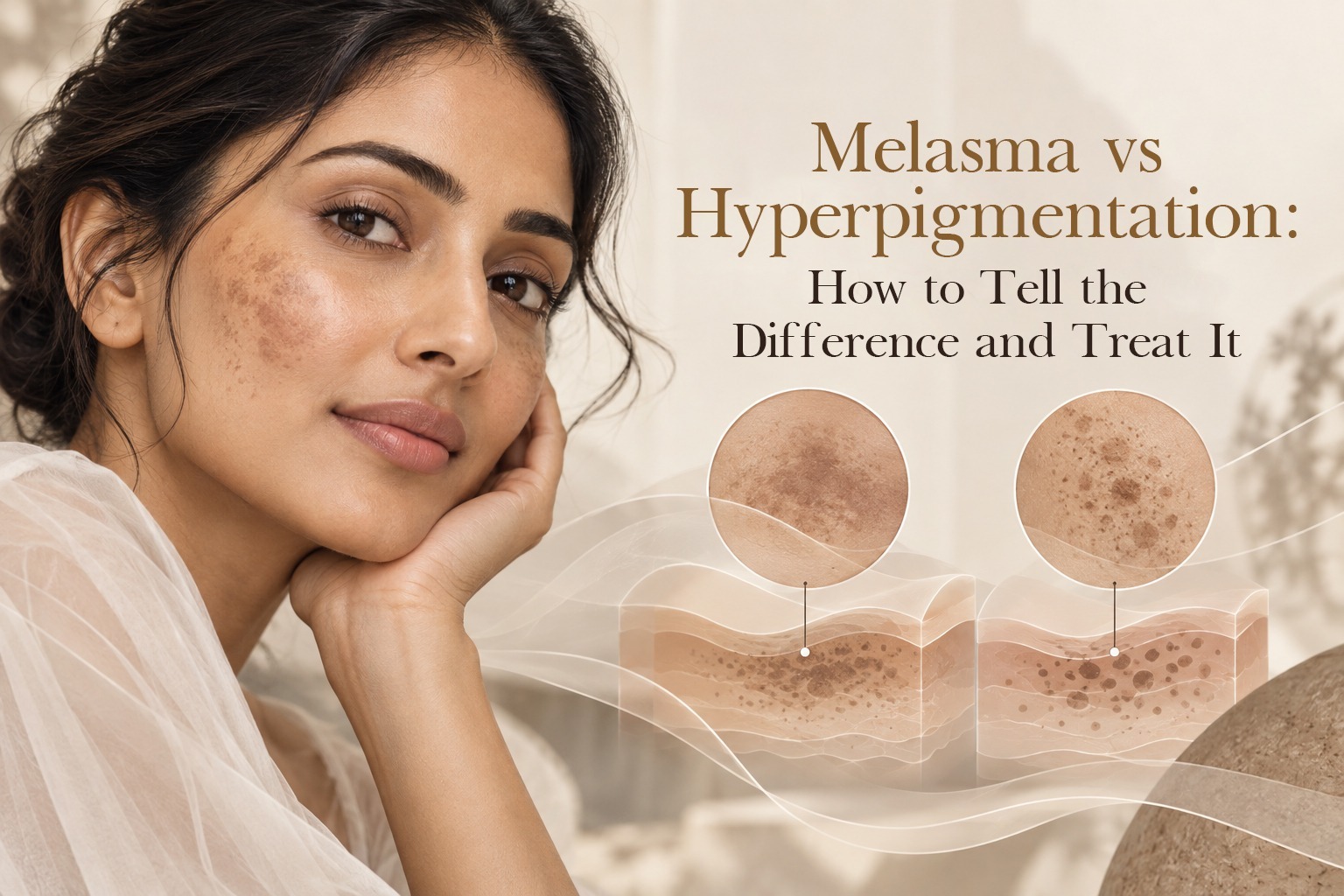
Melasma vs. Hyperpigmentation: How to Tell the Difference and Treat It

Reviewed by Dr. Ravali Yalamanchili
MBBS- Prathima Medical College
MD-JSS University, Mysore.
Melasma vs. Hyperpigmentation: How to Tell the Difference and Treat It
Uneven skin tone is a common concern, but not every dark patch has the same cause. Melasma and hyperpigmentation can both appear as darker areas on the skin, making them easy to confuse. However, their appearance, triggers, and treatment approaches can differ.
Understanding the distinction can help you avoid unsuitable products and choose professional guidance when needed.
What Is Hyperpigmentation?
Hyperpigmentation is a broad term used when certain areas of the skin become darker than the surrounding skin because of increased melanin production.
It can develop after acne, inflammation, injuries, sun exposure, or certain skin conditions. Some forms may gradually fade when the underlying trigger is addressed.
Hyperpigmentation can appear on different parts of the body and may have different patterns depending on its cause.
What Is Melasma?
Melasma is a specific pigmentation condition that commonly appears as brown or greyish patches, particularly on areas exposed to sunlight.
It frequently affects the face, including the cheeks, forehead, nose, and upper lip. Sun exposure can make the pigmentation more noticeable, while hormonal influences can also play a role.
Unlike a temporary dark mark left after a pimple, melasma can be persistent and may require a carefully planned treatment approach.
Common Causes of Facial Pigmentation
Several factors can contribute to darker patches or uneven skin tone.
Sun Exposure
Ultraviolet exposure can stimulate melanin production and make existing pigmentation more noticeable. Consistent sun protection is therefore an important part of pigmentation management.
Hormonal Changes
Hormonal fluctuations can contribute to melasma in some individuals. This is one reason pigmentation may appear or become more prominent during particular stages of life.
Acne and Inflammation
A healed acne lesion can sometimes leave behind a darker mark. This is known as post-inflammatory hyperpigmentation and is different from melasma.
Skin Irritation
Aggressive skincare products, excessive exfoliation, or irritation may worsen pigmentation in some people. A gentle routine can help minimize unnecessary inflammation.
How Is Melasma Treated?
There is no single treatment that works identically for everyone with melasma. The approach depends on the severity, skin type, pattern of pigmentation, and possible triggers.
A dermatologist may recommend topical treatments, procedures, or a combination depending on the individual case.
People considering melasma treatment in Hyderabad should ideally undergo a professional skin assessment before choosing a treatment.
Treatment Options for Hyperpigmentation
Managing hyperpigmentation begins with identifying its cause.
Depending on the condition, a dermatologist may recommend topical medications, chemical peels, laser-based procedures, or other treatments.
Professional treatment can be particularly helpful when pigmentation is persistent, widespread, or repeatedly returning.
For people searching for hyperpigmentation treatment in Hyderabad, a consultation can help determine whether the marks are related to acne, sun exposure, melasma, or another condition.
Why Sun Protection Is Important
Sun exposure can worsen many pigmentation concerns. Even after treatment, continued exposure may contribute to recurrence or make existing patches darker.
Using a broad-spectrum sunscreen and taking sensible sun-protection measures can therefore be an important part of a pigmentation-care routine.
Your dermatologist can recommend a sunscreen and skincare routine appropriate for your skin type and condition.
Don't Treat Every Dark Patch the Same Way
One of the most common mistakes is assuming that every dark mark requires the same product or procedure.
A pigmentation concern caused by acne may need a different approach from melasma. Similarly, irritation-related darkening should be managed differently from pigmentation caused by another skin condition.
This is why identifying the underlying cause is more useful than simply searching for the strongest pigmentation treatment available.
Choosing the Right Dermatologist
If pigmentation has become persistent or is affecting your confidence, professional evaluation can help.
When looking for the best dermatologist in Hyderabad, consider the doctor’s qualifications, experience, approach to diagnosis, and ability to create a treatment plan suited to your skin.
A reputable top dermatology clinic in Hyderabad should focus on understanding the underlying concern rather than recommending the same procedure to every patient.
Finding a Skin Clinic in Hyderabad
Patients looking for a skin clinic in Hyderabad can consider factors such as dermatological expertise, consultation quality, available treatment options, and follow-up care.
For people living around Jubilee Hills, searching for a skin clinic in Jubilee Hills or experienced skin doctors in Jubilee Hills can make regular consultations more convenient.
If you have multiple concerns involving both your skin and hair, a skin and hair clinic in Hyderabad may also provide a more comprehensive dermatological consultation.
Similarly, people specifically searching for a skin and hair clinic in Jubilee Hills can look for a clinic that offers professional evaluation for both types of concerns.
Read More: